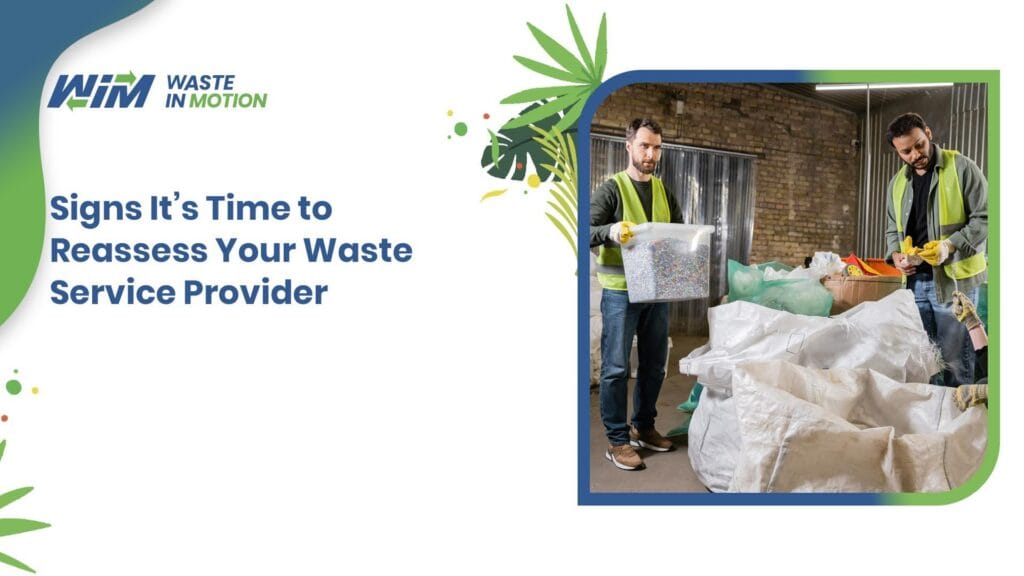
Waste service tends to stay in the background until something goes wrong. A missed pickup, a rising invoice, an overflowing bin, or a contract that no longer fits the business can quietly turn a routine service into an ongoing operational problem.
That is why a waste service provider review should not only happen when things feel broken. It should happen before waste service starts affecting cost, compliance, cleanliness, and day-to-day efficiency.
Why Businesses Should Review Their Waste Service Provider Regularly
A strong provider should make business waste management easier. If the opposite is happening, it is usually worth taking a closer look.
A review is especially useful when:
- the business has grown or changed
- the waste volume no longer matches the setup
- invoices are harder to explain
- pickups are becoming unreliable
- recycling is underperforming
- contract renewal is approaching
Many waste issues are really system issues, which is why it helps to read this blog on key challenges in waste management and how to overcome them before renewing the same setup again.
Sign #1: Your Waste Bills Keep Increasing Without Clear Explanation
This is one of the easiest warning signs to spot.
Watch for Unclear Fees and Surcharges
A waste invoice should make sense without a long follow-up call. If it is filled with charges that were never clearly discussed, that is a problem.
Common pain points include:
- fuel charges
- environmental fees
- recovery fees
- admin charges
- contamination fees
- extra haul charges
Public examples of waste invoice surcharges show exactly why businesses need to understand what is built into the quoted rate and what may appear separately later.
Compare Your Current Rate Against Your Actual Service
Look at what you are paying compared with what you are actually using:
- are bins always full?
- are they often half-empty?
- has recycling reduced garbage volume?
- are you paying for service frequency you no longer need?
- are extra pickups becoming normal?
A proper waste provider review should answer those questions before more money gets locked into the wrong setup.
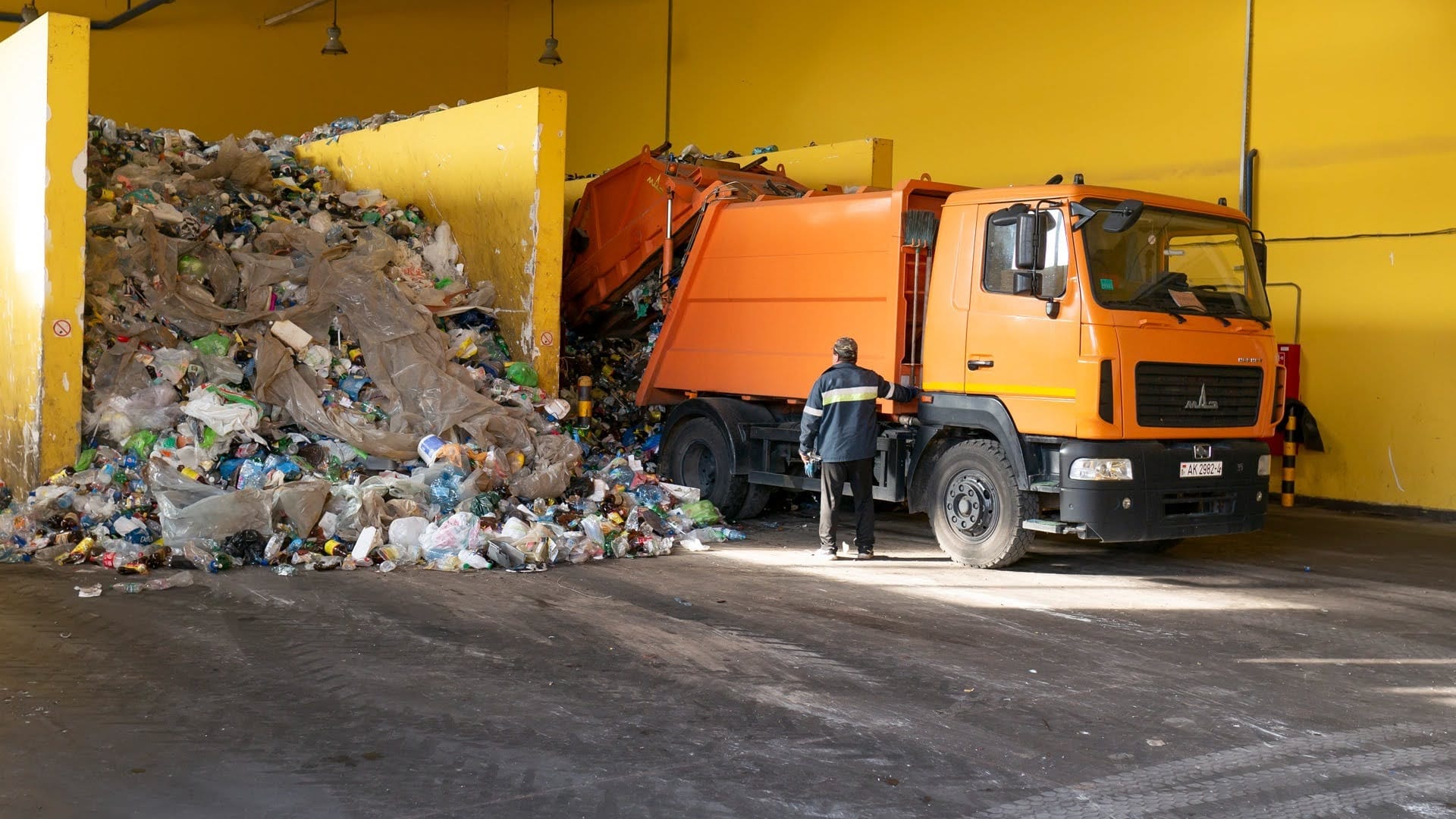
Sign #2: Missed Pickups Are Becoming a Regular Problem
One missed pickup can happen. Repeated missed service is a bigger warning sign.
Missed Pickups Can Create Bigger Business Issues
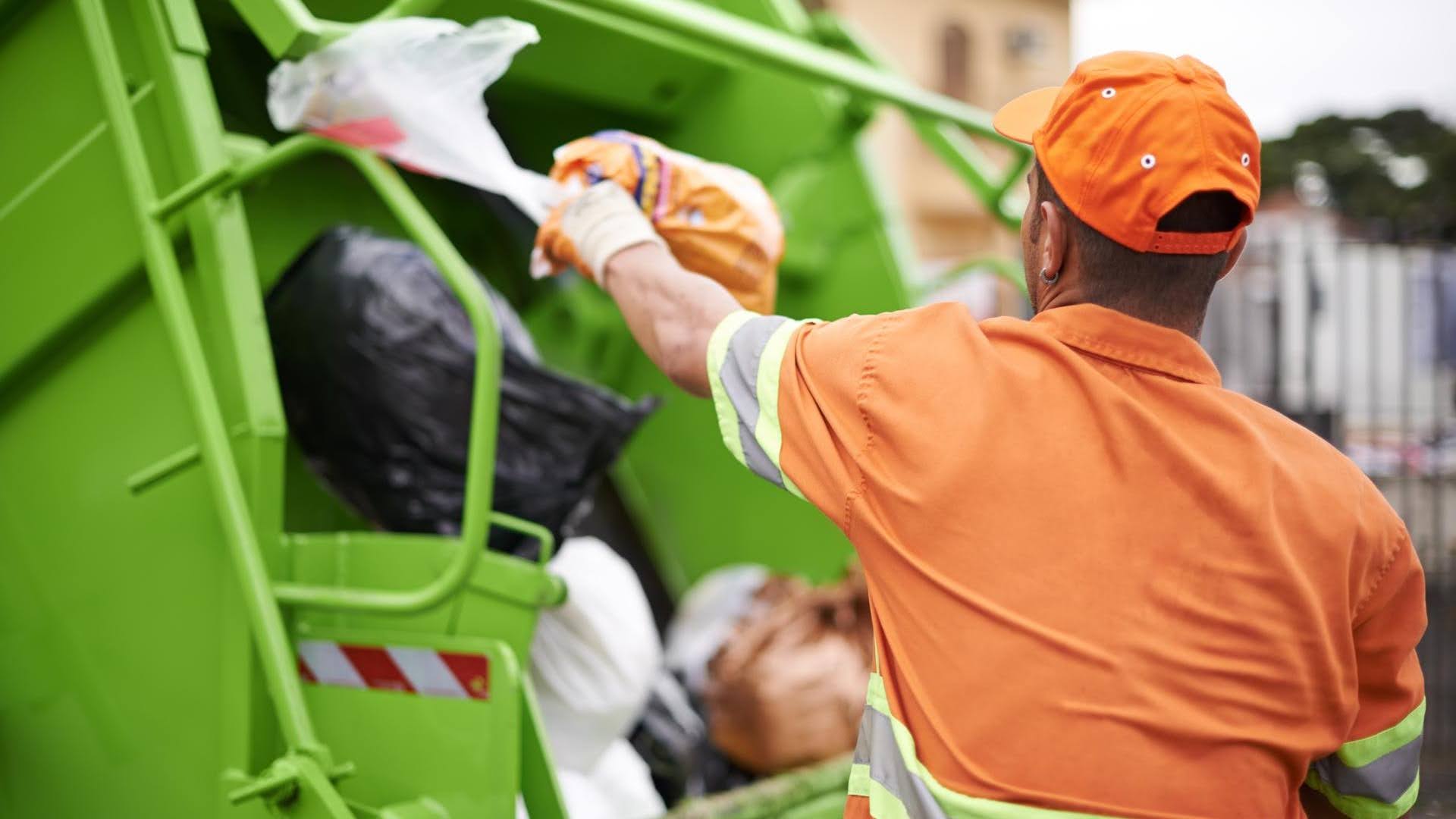
When commercial garbage pickup gets missed, the consequences spread quickly:
- bins overflow
- waste gets left outside the container
- staff lose time dealing with cleanup
- customer-facing areas look worse
- safety and sanitation become harder to manage
One Missed Pickup May Be Fixable, Repeated Missed Pickups Are a Red Flag
If missed waste pickup is becoming a pattern, the issue is no longer just scheduling. It may point to a provider that is not managing the account well or not responding quickly enough when service problems happen.
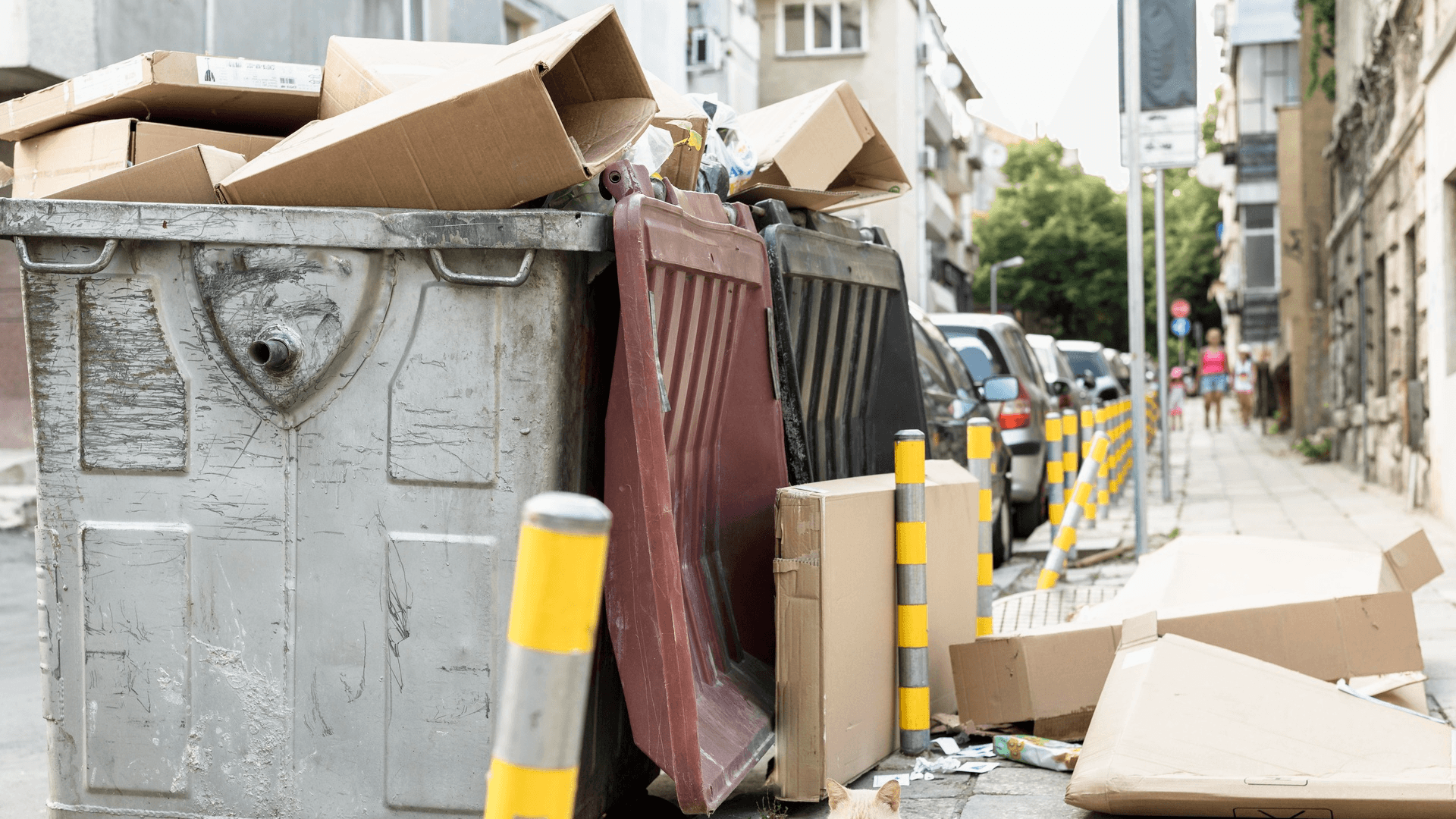
Sign #3: Your Bin Size No Longer Matches Your Waste Volume
A mismatched container setup creates cost problems in both directions.
Oversized Bins Can Mean You’re Overpaying
If the bin is consistently underfilled, there is a good chance you are paying for more capacity than the site actually needs.
Undersized Bins Can Lead to Overflow and Extra Pickups
If the bins are too small, you usually get:
- overflow
- emergency service
- more mess around the enclosure
- contamination from rushed disposal
Seasonal or Business Growth Changes Can Affect Waste Needs
Retail peaks, staffing changes, tenant turnover, product mix shifts, and business growth all affect waste volume. If the service has not changed with the operation, the setup may no longer be right.
Sign #4: You’re Locked Into a Waste Contract That No Longer Works
A contract that made sense two years ago may not make sense now.
Long-Term Contracts Can Become Costly Over Time
The longer a service agreement runs without review, the more likely it is to drift away from the business’s real needs.
Look for Restrictive Terms Before Renewing
Before renewing a commercial waste contract, review:
- automatic renewal clauses
- exit terms
- service adjustment limits
- surcharge language
- price increase terms
- notice periods
A Waste Service Provider Review Can Reveal Better Options
A proper waste contract review can show whether the current agreement still fits your service needs, pricing expectations, and operational changes. If you want to look at that more closely, read more about our waste contract review support.
Sign #5: Customer Support Is Slow or Hard to Reach
Service quality is not only about the truck showing up. It is also about what happens when something changes.
Poor Communication Causes Delays
If your provider is hard to reach, slow to respond, or vague when issues come up, small problems usually take longer to solve than they should.
Businesses Need a Responsive Waste Partner
A strong waste management provider should be able to respond quickly when:
- pickups are missed
- bins need to be resized
- the schedule needs adjusting
- invoices need clarification
- recycling support needs improvement
Poor waste provider customer service creates more operational drag than businesses often realize.
Sign #6: Your Business Has Changed, But Your Waste Service Hasn’t
Businesses evolve. Waste service should evolve with them.
If your business has:
- expanded
- downsized
- changed operating hours
- added tenants
- shifted waste streams
- improved recycling
- changed delivery patterns
but the service still looks exactly the same, that is a strong sign the setup should be reassessed.
Sign #7: Recycling Options Are Limited or Poorly Managed
A provider should help you separate waste more effectively, not push everything into general garbage.
Your Provider Should Help You Separate Waste More Effectively
If recycling support is weak, businesses usually miss out on cleaner sorting, lower garbage volume, and better overall service efficiency.
Poor Recycling Support Can Increase General Waste Volume
That often leads to:
- more general waste pickups
- more landfill disposal
- weaker sustainability performance
- more avoidable cost
In Calgary, businesses are expected to follow commercial waste and recycling rules, including recycling and food-and-yard-waste diversion requirements. EPA’s recycling guidance is also a useful reminder that accepted materials and contamination rules matter more than many businesses realize.
Sign #8: Overflowing Bins Are Becoming Normal
Overflow is one of the clearest signs the service setup is wrong.
Overflow Usually Means the Service Setup Is Wrong
When overflowing bins become routine, the issue is usually one of three things:
- the bin is too small
- the pickup schedule is wrong
- the business has changed and the service never did
Overflow Can Affect Safety and Site Appearance
Overflow also affects:
- cleanliness
- site appearance
- staff access
- pest control
- customer impression
Normal overflow is not normal service.
Sign #9: You Don’t Know What You’re Actually Paying For
If the invoice is confusing, the service is harder to manage properly.
Your Waste Invoice Should Be Easy to Understand
A good invoice should make it clear:
- what service was provided
- what fees were charged
- what changed from the last cycle
- whether the service still makes sense
Confusing Billing Is a Reason to Request a Review
A proper waste service review should include the bill, not just the bins.
Sign #10: You’re Managing Multiple Waste Vendors
This is common in larger or growing businesses, and it often creates more work than it solves.
Multiple Vendors Can Create More Admin Work
More vendors usually means:
- more invoices
- more schedules
- more service contacts
- more room for missed communication
- more time spent managing waste instead of operations
Consolidating Waste Services Can Improve Efficiency
If you are coordinating service across multiple sites, read this blog on waste contract management for multi-location businesses. It is a helpful next step when the current setup is creating more administration than value.
How Often Should You Review Your Waste Service Provider?
At minimum, once a year is a good habit.
You should also review sooner if:
- bills increase unexpectedly
- pickups are missed regularly
- bins are overflowing
- your business changes significantly
- a renewal period is coming up
- recycling obligations have changed
What to Check During a Waste Service Provider Review
A useful review should look at:
- pickup frequency
- actual bin usage
- overflow patterns
- missed service history
- invoice structure
- contamination charges
- recycling support
- customer service responsiveness
- contract renewal terms
- whether the service still fits the business
That is the foundation of real waste service optimization.
Questions to Ask Before Switching Waste Service Providers
Pricing Questions
- What fees are included in the quoted rate?
- Are fuel, environmental, or admin charges separate?
- How often can pricing change?
- Are overflow or contamination fees possible?
Service Questions
- How quickly can the schedule be adjusted?
- How are missed pickups handled?
- Can garbage and recycling be reviewed together?
- Can service levels be updated if the business changes?
Contract Questions
- Is there automatic renewal?
- What notice is required to cancel or adjust service?
- Can container sizes or pickup schedules change during the term?
- Is billing consistent and easy to audit?
Final Takeaway: Don’t Wait Until Waste Service Becomes a Bigger Problem
Most businesses wait too long to reassess their provider. By the time the frustration is obvious, the extra cost and inefficiency have usually been building for months.
A good waste service provider review helps you catch the warning signs earlier:
- rising costs
- missed pickups
- wrong-size bins
- weak recycling support
- confusing billing
- poor customer service
- contracts that no longer fit the business
If your current waste setup is becoming harder to manage or more expensive than it should be, read more about our waste contract management service. It is designed to help businesses review current service, identify contract issues, improve waste and recycling efficiency, and build a setup that fits the way the operation actually runs.